Creative Productivity - Lessons From Theodore Roosevelt
Creative Productivity - Lessons From Theodore Roosevelt
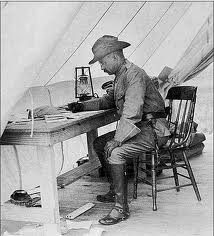
To list Theodore Roosevelt's accomplishments could easily take the rest of this post; any random year of his life contains more adventure and accomplishment than most men achieve in a lifetime. Cowboy, Rancher, Naturalist, Big Game Hunter, Police Commissioner of New York City, Colonel of the "Rough Riders", Governor, Vice President, President of the United States... He also still found time to play with his five children a couple of hours a day and remain a devoted husband.
On top of all of this, he also wrote more than thirty books—more than many authors who write full time.
So how did he do it?
One clue can be found in Candace Millard's wonderful book "River of Doubt," an account of Roosevelt's disaster-plagued expedition in the Amazon basin. At one point they were on half rations—despite doing back-breaking labor of porting canoes over land, paddling, and enduring sweltering Amazon heat.
Roosevelt was also suffering from recurrences of malaria he had contracted during the Spanish American War, often running a temperature of over a hundred degrees.
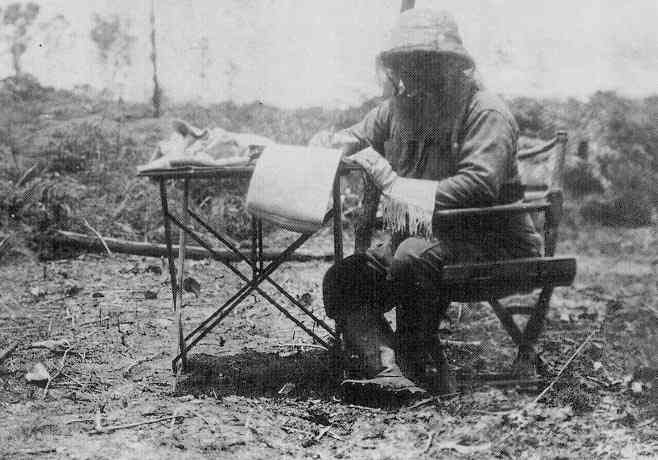
Although Roosevelt was a co-expedition leader, he still had his share of duties. They were lighter than those of the younger men and porters but still tedious: hand laundering clothes, for example. Despite all this, he still found time to write.
Funds for the expedition were raised in part by Roosevelt promising to provide Scribner's with an account of the expeditions. Readers stateside could follow along with Roosevelt's adventures from the comfort of their homes. These became the basis for his popular book Through the Brazilian Wilderness.
Did he wait until he returned to the comfort of Sagamore Hill, don his cigar and slippers and retire to his study? No.
He would rise before the rest of the camp was awake and official duties began, go for his morning swim (first checking for piranhas and alligators), then he would write his self-set quota of pages for Scribner's.
It made sense to write this early for several reasons:
Firstly there were no other disturbances or distractions. Second, it's a lot easier to write at the beginning of the day rather than at the end of it, when one is tired. Knowing he knocked out his quota of pages for the day was probably a relief to Roosevelt, rather than having them waiting after a long day.
Some might counter that it would be better to wait until the expedition was over with to sit down and write in the comfort of one's own home, but undoubtedly many details would have been lost. Even in our day of ubiquitous media capture devices, it's much better to reflect on events while they are still fresh in the mind. Also, the task of recalling the whole expedition could be quite daunting. Instead, he chipped away at it every day.
Another famous explorer and productive writer, Sir Richard Francis Burton, also insisted on writing every night while on expedition, despite suffering from similar ailments to Roosevelt. To this day his observations of the Punjab and Somaliland are still referenced by researchers.
So what's keeping you from writing? How many times have you not written because you had the sniffles, or "didn't feel like it"? I don't doubt that there are many real obligations that are enormously time consuming—it takes a lot of energy and devotion to raise children, to truly be dedicated to doing a good job at work, or being a caring spouse. Sir Richard Francis Burton and Theodore Roosevelt were extraordinary men, possessing enormous energy, drive, and abnormally high intelligence (TR had a near photographic memory and would often read a book in a day); but we could take some cues from their dedication to writing and not letting obstacles get in the way.